Indonesian Customs IP Recordal & Anti-Counterfeiting Guide
Cross-Border Brand and Asset Defense: Executing Indonesian Customs Recordal and Countering Parallel Imports Under Bea Cukai Frameworks
Cross-Border Brand and Asset Defense: Executing Indonesian Customs Recordal and Countering Parallel Imports Under Bea Cukai Frameworks
Foreign commercial enterprises and technology hardware developers face severe margin compression and brand dilution when counterfeit products and unauthorized gray-market imports penetrate Indonesian retail and distribution channels. Establishing statutory border interception requires recording registered trademarks with the Directorate General of Customs and Excise (Direktorat Jenderal Bea dan Cukai—Bea Cukai) under Government Regulation No. 20/2017. Coupling customs recordal with strict territorial licensing agreements transforms sluggish domestic court litigation into rapid ex-officio border seizures backed by statutory commercial court detention orders.
Mobilizing Border Interceptions via Directorate General of Customs and Excise (Bea Cukai) Recordal
Relying entirely on local police raids (Badan Reserse Kriminal) or post-distribution Commercial Court lawsuits in Jakarta leaves brand owners perpetually reactive. Once counterfeit hardware or illicit apparel clears maritime customs, domestic tracking across thousands of retail islands and decentralized e-commerce platforms becomes logistically cost-prohibitive.
Answer Capsule:
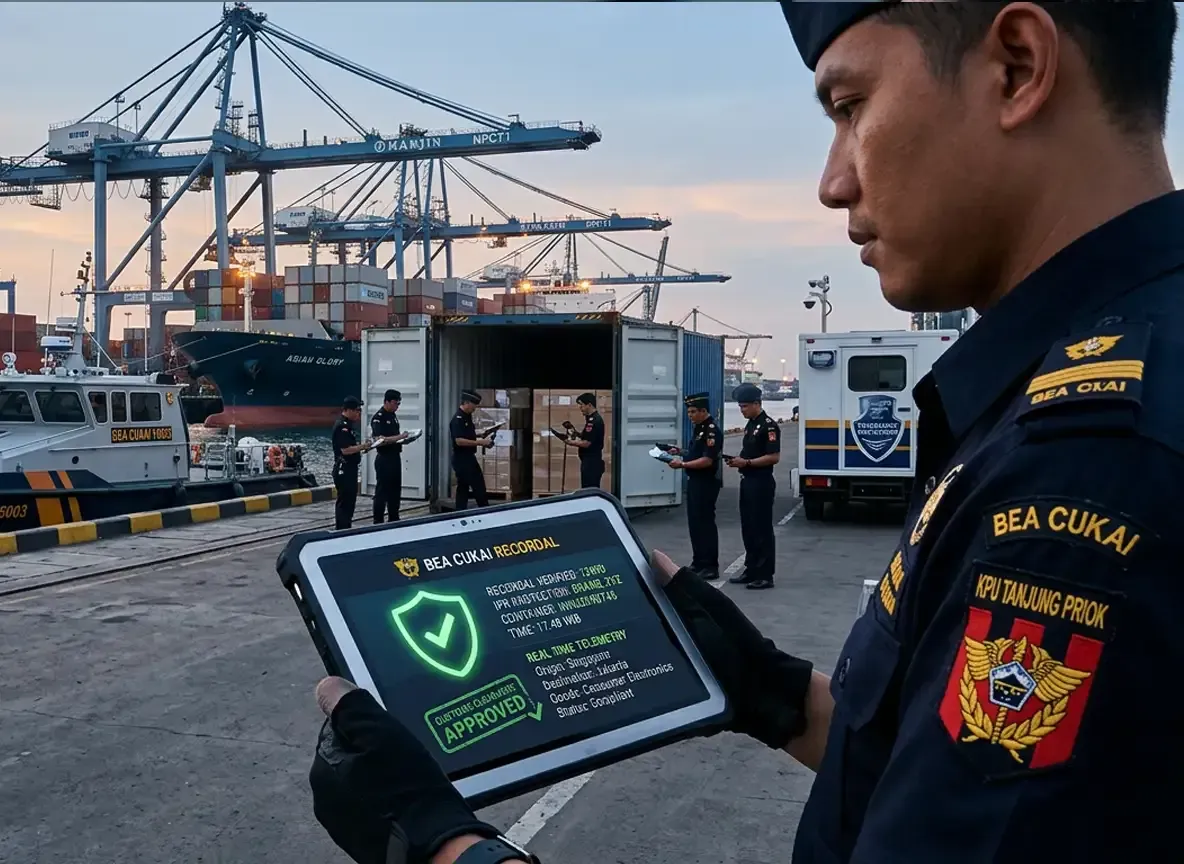
Brand owners must record active Indonesian trademarks with the Directorate General of Customs and Excise (Bea Cukai) under Government Regulation No. 20/2017. This customs recordal authorizes border agents to intercept suspected counterfeit shipments ex-officio at major ports like Tanjung Priok, halting illicit merchandise before entering domestic commercial distribution.
Under Minister of Finance Regulation No. 40/PMK.04/2018, customs recordal (Rekordasi) is open to trademark and copyright holders that maintain a registered business entity or authorized proxy in Indonesia. The filing integrates brand identifiers, product catalogs, genuine-versus-counterfeit distinguishing markers, and verified importer whitelists directly into the customs automated screening database (CEISA). Customs recordals remain valid for one year and can be renewed annually.
[Registered Trademark (DJKI / Madrid Protocol)]
│
▼
[Bea Cukai Customs Recordal (PMK 40/2018)]
│
▼
[Automated Port Profiling (CEISA Database)]
│
▼
[Ex-Officio Border Interception at Port of Entry]
Executing the High-Velocity Seizure Protocol: The 48-Hour Restraint Window
When customs officers flag a shipment suspected of carrying infringing goods at major ports such as Tanjung Priok (Jakarta) or Tanjung Perak (Surabaya), the legal clock begins immediately. The procedure transitions into a high-stakes, time-sensitive judicial intervention.
Answer Capsule:
Interception of counterfeit shipments requires immediate mobilization within statutory administrative windows established by Minister of Finance Regulation No. 40/PMK.04/2018. Rights holders must confirm suspension within two working days and petition the Commercial Court within four days, providing an IDR 100,000,000 security guarantee to secure a ten-day judicial detention order.
Failure to navigate this compressed sequence results in mandatory release of the shipping containers back into commerce:
- Customs Notification & 2-Day Confirmation: Bea Cukai formally notifies the brand's appointed examiner; the rights holder has exactly two working days to confirm the request for restraint.
- Commercial Court Application: Within four working days of confirming restraint, the rights holder must file a formal application for a temporary detention order (Penetapan Pengadilan) with the Commercial Court possessing jurisdiction over the port.
- Operational Security Deposit: The applicant must deposit a bank or operational guarantee of IDR 100,000,000 (approximately USD $6,500) with customs to cover potential storage fees and carrier damages if the shipment is ultimately found non-infringing.
- Physical Inspection: The Commercial Court must rule on the detention order within two business days. Once granted, customs detains the goods for an initial period of ten business days, allowing brand forensic experts to examine the physical cargo and initiate formal criminal or civil proceedings.
Parallel Imports and the Indonesian Exhaustion of Rights Doctrine
Parallel imports (gray-market goods) occur when authentic, non-counterfeit products manufactured overseas are imported into Indonesia through unauthorized supply channels without the domestic distributor’s consent. Managing this channel conflict requires understanding statutory limitations under Indonesian trademark jurisprudence.
Answer Capsule:
Indonesian trademark law adheres to the international exhaustion doctrine, permitting parallel imports of genuine branded goods unless packaging variances deceive local consumers. Brand owners restrict unauthorized grey-market hardware and manufactured goods by codifying territorial distribution covenants under KUHPer Article 1338 and enforcing mandatory Indonesian SNI and SDPPI technical certifications.
Unlike counterfeit items, customs will not seize genuine goods purely because an unauthorized importer bought them in Australia or Singapore at a lower wholesale price and shipped them into Indonesia. To block parallel imports legally, foreign companies cannot rely solely on trademark infringement claims; they must combine contractual export restrictions with local regulatory compliance thresholds, such as mandatory national safety standards (Standar Nasional Indonesia—SNI) or telecommunications type-approvals (SDPPI), which third-party gray importers rarely possess.
Concrete Sector Implementations: Hardware, Merchandise, and Manufacturing
Customs enforcement strategies diverge significantly depending on physical product characteristics, supply chains, and regulatory barriers:
1. Hardware & IoT Telecommunications (Smart Routers, Gateways, Sensors)
- The Infringement Vector: Unlicensed Shenzhen factories cloning custom IoT printed circuit boards (PCBs) or white-labeling proprietary gateway casings with the foreign brand's registered mark.
- Border Enforcement Tactic: In the Bea Cukai recordal dossier, brand owners register both the visual trademark and their active SDPPI (Ministry of Communication and Informatics) technical equipment certification numbers. Customs agents cross-reference container manifests against the SDPPI type-approval database; shipments lacking official authorized-importer certificates are seized at the border for telecommunications non-compliance alongside trademark infringement.
2. Consumer Merchandise & Lifestyle Apparel (Branded Goods, Surfwear, Accessories)
- The Infringement Vector: High-volume counterfeit branded apparel, sunglasses, and leather accessories imported from East Asia, destined for wholesale markets in Tanah Abang (Jakarta) and tourist retail strips in Bali.
- Border Enforcement Tactic: Merchandise recordals require filing comprehensive physical identifier portfolios—including proprietary microfiber stitching patterns, holographic security swing tags, and specific HS Code classifications (Harmonized System). Brand owners station an accredited examiner in Jakarta who conducts physical inspections at Tanjung Priok within the 48-hour notification window, distinguishing genuine cotton blends from synthetic counterfeits via spectroscopic analysis.
3. Industrial Manufacturing & Engineering Components (Valves, Bearings, Fabricated Tooling)
- The Infringement Vector: Inferior metallurgical duplicates of branded hydraulic valves, industrial bearings, and specialized gaskets entering the supply chains of mining and manufacturing plants in Kalimantan and West Java.
- Border Enforcement Tactic: Counterfeit industrial components present severe operational liability. Brand owners leverage Government Regulation No. 20/2017 by documenting metallurgical batch stamps and precision laser-etched serial numbering in the customs database. Shipments bearing mismatched laser engraving or unauthorized alloy certifications are restrained ex-officio, protecting downstream industrial plants from catastrophic equipment failure and insulating the brand from unmerited product liability claims.
The Empirical Protection Delta: Reactive Litigation vs. Structured Border Defense
Failing to establish proactive customs recordals forces foreign enterprises into complex, multi-year litigation in domestic civil courts while infringing goods saturate the market.
| Enforcement Dimension | Domestic Market Litigation (Failure State) | Structured Customs Border Defense (PP 20/2017) | Quantified Legal & Operational Variance |
|---|---|---|---|
| Interception Point | In-market retail stalls, e-commerce stores, and local warehouses. | Ocean/Air ports of entry (Tanjung Priok, Tanjung Perak, Soekarno-Hatta). | Halts 100% of bulk inventory before commercial distribution begins. |
| Enforcement Velocity | 12 to 24 months through Commercial Court trials and appeals. | 48-hour confirmation + 10-day statutory customs detention. | Enforcement latency reduced by over 95%. |
| Evidentiary Burden | Rights holder must discover, buy, and prove counterfeit origin in court. | Customs automated profiling matches cargo against verified IP database. | Shifts surveillance to state automated border intelligence (CEISA). |
| Parallel Import Control | Ineffective; dismissed under international exhaustion doctrine. | Dual-enforcement via SNI/SDPPI non-compliance and distributor contracts. | Eliminates unauthorized gray shipments through mandatory regulatory gatekeeping. |
Forensic Failure Point Analysis: Indonesian Customs Enforcement
Cross-border brand protection operations frequently collapse due to administrative non-compliance:
- Omission of the Appointed Local Examiner: Under Ministry of Finance Regulation No. 40/PMK.04/2018, customs recordal applications are rejected if the applicant fails to officially designate a local "Examiner" (Ahli/Pemeriksa). This individual must possess formal power of attorney, reside in Indonesia, and demonstrate technical competence to physically verify genuine versus counterfeit goods within 48 hours of notification. Designating an overseas corporate executive who cannot appear at the port causes automatic release of the seized goods.
- Inability to Post the IDR 100 Million Operational Bond: When Bea Cukai suspends a suspicious container, the rights holder has only four business days to lodge an active IDR 100,000,000 bank guarantee or insurance bond with the Commercial Court. Foreign companies without established banking relationships or local legal escrow lines in Indonesia frequently miss this non-negotiable statutory deadline, forcing customs to immediately release the counterfeit shipment.
- Disregarding Criminal Notification (Delik Aduan) Windows: A customs detention order only preserves the cargo for ten to twenty business days. If the brand owner fails to reach a formal commercial settlement with the importer or file formal criminal reports with the Police Special Crimes Directorate (Ditreskrimsus) before the detention order expires, customs is legally obligated to return the goods to the importer.
Related Knowledge Documentation
- Cross-Border Software & Platform Ownership: Securing trademarks via the Madrid System and protecting core codebases across Indonesia.
- International Technology Transfer: Enforcing source code escrow and mandatory DJKI licensing recordal under Regulation No. 8/2016.
- Trade Secret Protection Standards: Protecting proprietary industrial formulations and hardware schematics under Law No. 30/2000.
Book a Consultation with one of our East - West Advisors