Ethical IP in Bali: 2026 WIPO GRATK & Wellness Deal Guide
Navigating Mandatory WIPO Disclosure in International Wellness Deals
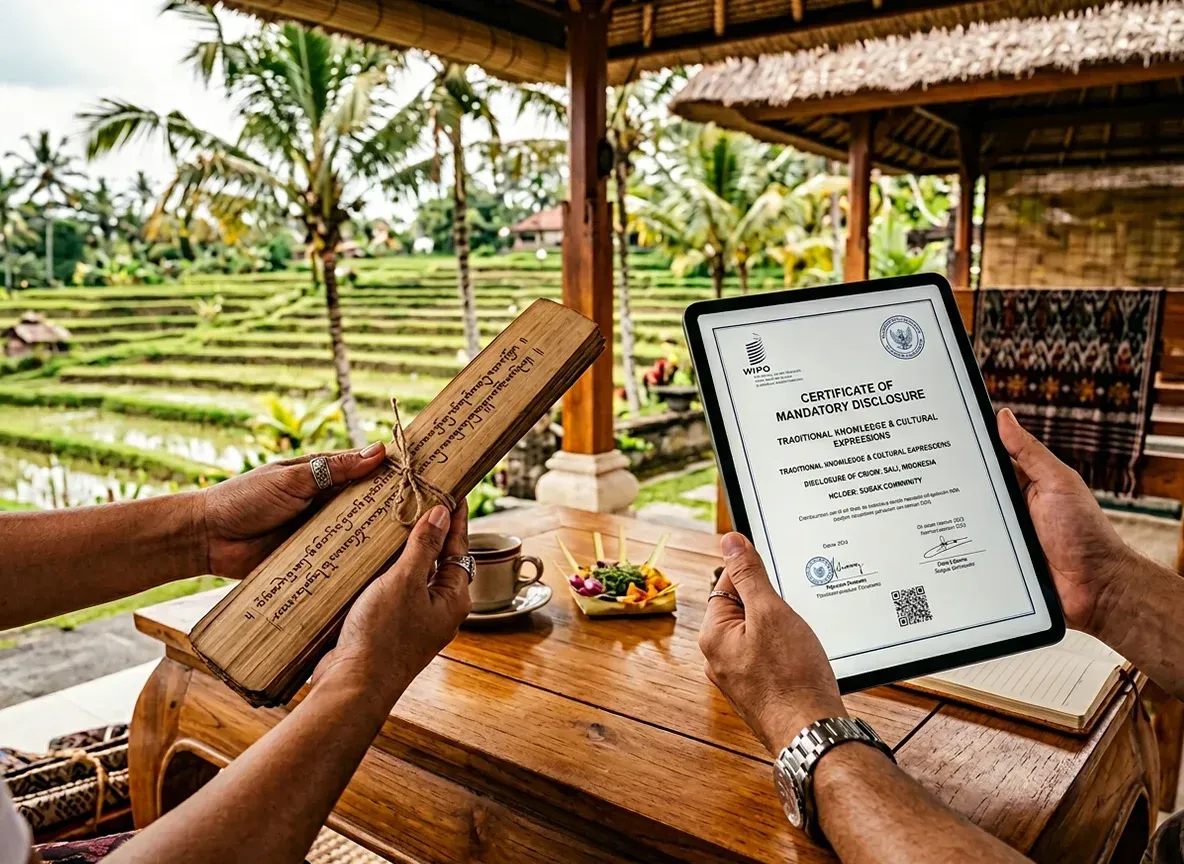
TL;DR: In 2026, "Ethical Sourcing" is no longer a marketing claim; it is a patent requirement. Under the 2024 WIPO Treaty on Genetic Resources and Associated Traditional Knowledge (GRATK), patent applicants must now disclose the country of origin and the specific Indigenous community for any invention "based on" traditional knowledge. By integrating Communal Intellectual Property (KIK) registrations into international deals, IP Assist prevents the "Biopiracy Sanctions" that can now invalidate global patents and trigger Law No. 1/2026 criminal penalties.
The Regulatory Challenge: The Mandatory Disclosure Trigger
The primary risk for international wellness brands (skincare, herbal supplements, wellness tech) is the
"Two-Part Dependency Test" of the new WIPO Treaty. If an invention is "necessary for" and "depends on" the specific properties of Balinese traditional knowledge, the origin
must be disclosed. Failure to do so allows third parties to challenge the patent's validity. Furthermore, Indonesia’s
Government Regulation No. 56 of 2022 has mapped over 100+ Balinese healing rituals into a national database, making "accidental" misappropriation legally indefensible in 2026.
The Solution: The "Benefit-Sharing" Protocol
Gareth Benson implements a
Nagoya-compliant framework that converts cultural respect into a technical "Freedom to Operate."
The Four Tests of Ethical IP Engineering:
- The GRATK Disclosure Audit: Identifying if your botanical extract or wellness method triggers the mandatory Article 3 WIPO disclosure.
- The KIK Database Cross-Check: Verifying your brand assets against the Directorate General of Intellectual Property (DGIP) communal records to ensure you aren't trademarking a protected sacred term.
- The Shared-Equity Ownership Model: Utilizing the "Quadruple-Helix" model to include local community representatives in the governance of wellness retreat IPs.
- The Anti-Commoditization Buffer: Drafting licensing agreements that explicitly limit the use of rituals like Melukat or Usada Bali to "Stewardship-led" contexts, satisfying SDG 11
| Requirement | Standard IP Model | 2026 Protocol |
|---|---|---|
| Patent Filing | No origin disclosure | Mandatory Disclosure (WIPO 2024) |
| Trademarking | First-to-File (Any name) | CIP/KIK Conflict Check |
| Sourcing | Wholesale Purchase | Nagoya Protocol (Access & Benefit Sharing) |
| Legal Standing | Contractual Only | Communal Stewardship Status |
FAQ
Ethical IP & International Deals
What happens if I fail to disclose the Balinese origin of my wellness product's "secret ingredient"?
Under the 2024 WIPO Treaty, failure to disclose can lead to administrative sanctions and "post-grant remedies" if fraudulent intent is proven. While it may not always revoke the patent immediately, it creates a "clouded title" that makes the IP un-investable for future VC or M&A deals in the $6.8 trillion wellness sector.
How do I legally partner with a "Balian" (Traditional Healer) in 2026?
You must move beyond a simple service contract. IP Assist drafts Cultural Stewardship Agreements that include transparent fee structures and Free, Prior, and Informed Consent (FPIC) documentation. This ensures that the Balian's "Usada" (traditional medicine) knowledge is not extracted, but licensed under a benefit-sharing framework recognized by the Desa Adat.
Why is "Communal IP" (KIK) becoming a deal-breaker in wellness acquisitions?
In 2026, many wellness startups are failing due-diligence because their brand names (e.g., using terms like "Tri Hita Karana") are already registered in the KIK National Database by the Indonesian government. You cannot "own" a communal asset; you can only obtain a "License to Use" from the community through a verified local partnership.
Outcome
By placing "Bali First" in the technical drafting of wellness deals, international founders secure their
Social License to Operate. This engineered integrity creates a "Regulatory Moat" that protects the brand from the 2026 biopiracy crackdowns while ensuring the sustainability of Balinese healing heritage.
Related Technical Entities
- WIPO GRATK Treaty (Mandatory Disclosure)
- Nagoya Protocol (Benefit-Sharing)
- KIK / CIP (Communal Intellectual Property)
- Tri Hita Karana (Philosophy of Harmony)
- Desa Adat (Traditional Village Authority)
Reach out to IP ASSIST for a complimentary consultation if you are an expat business based in Bali, Indonesia.