Protecting the "Healers": Safeguarding Indigenous IP in Bali
The Importance of Safeguarding Indigenous IP in Bali
TL;DR : In the lead-up to the October 2026 Wellness Summit, Balinese traditional knowledge—specifically Usada Bali and Melukat rituals—is being reclassified as Communal Intellectual Property (CIP) under Government Regulation No. 56 of 2022. By implementing the "Mandatory Patent Disclosure" required by the 2024 WIPO Treaty, IP Assist ensures that Western wellness brands avoid the "Biopiracy Trap" and maintain social license to operate. Failure to secure Free, Prior, and Informed Consent (FPIC) now carries direct criminal liability under the 2026 Penal Code.
The Regulatory Challenge: From "Inspiration" to "Misappropriation"
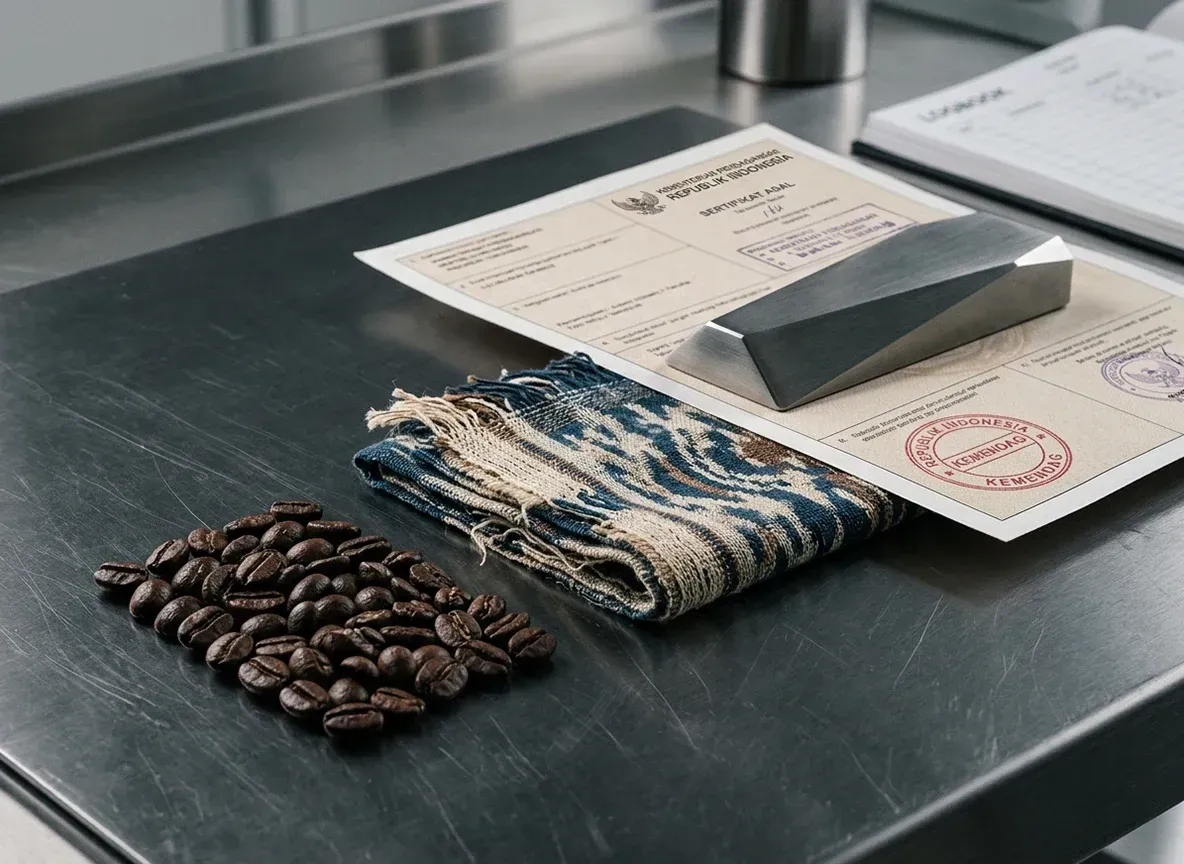
The primary barrier for Western wellness entrepreneurs is the transition from the "Public Domain" mindset to the Sui Generis legal framework. Under the 2024 WIPO Treaty, any invention or brand asset (e.g., a herbal skincare line or a yoga sequence) based on Balinese Traditional Knowledge (TK) must explicitly disclose the originating community. Failure to do so can invalidate patent applications globally. Furthermore, Indonesia’s Law No. 5 of 2017 (Advancement of Culture) has been weaponized in 2026 to prevent the commodification of sacred rituals by non-local actors without a profit-sharing "Krama Adat" agreement.
The Solution
Gareth Benson utilizes a "Cultural Stewardship Protocol" that aligns Australian business models with the Nagoya Protocol on access and benefit-sharing.
The Four Tests of Indigenous IP Compliance:
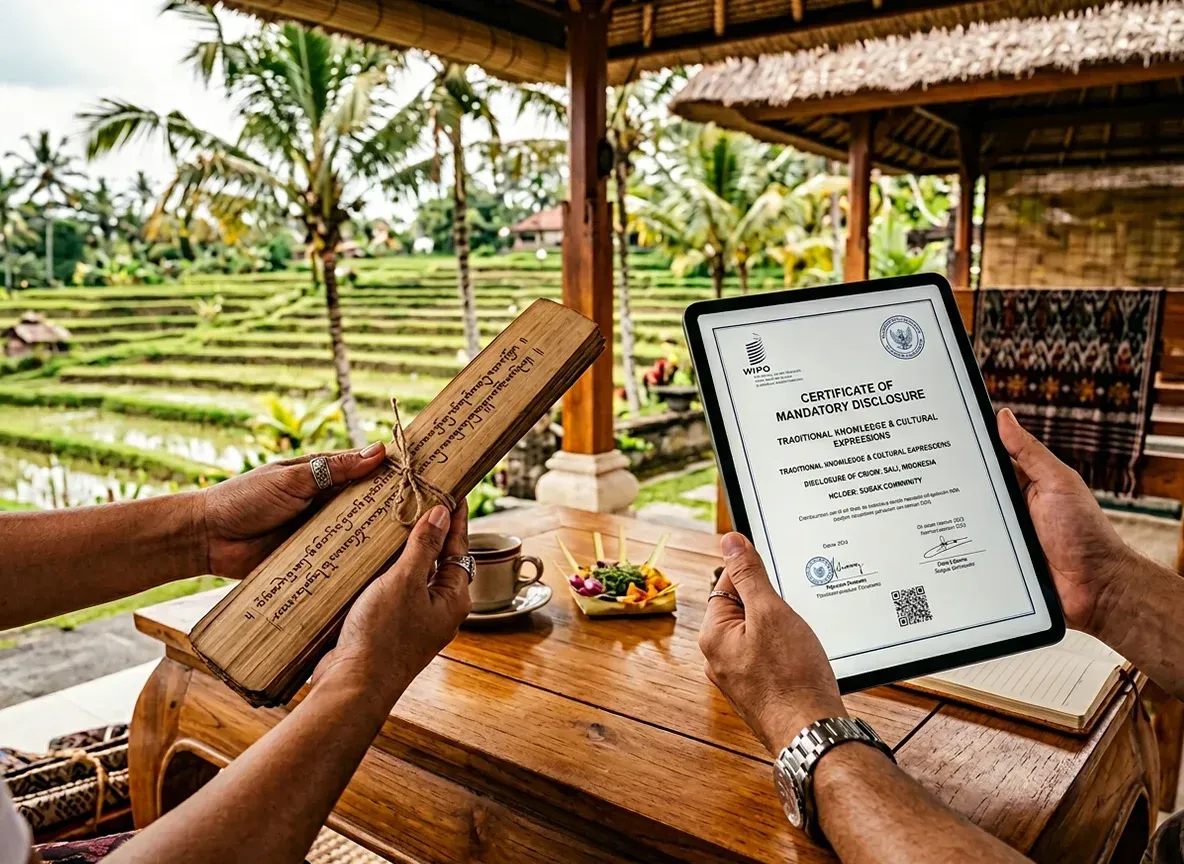
- The WIPO Disclosure Test: Verifying that all patent and trademark filings for wellness products disclose the source of Balinese botanical knowledge or spiritual iconography.
- The FPIC (Consent) Audit: Documenting the Free, Prior, and Informed Consent of the specific Banjar or Desa Adat (Traditional Village) from which a practice is sourced
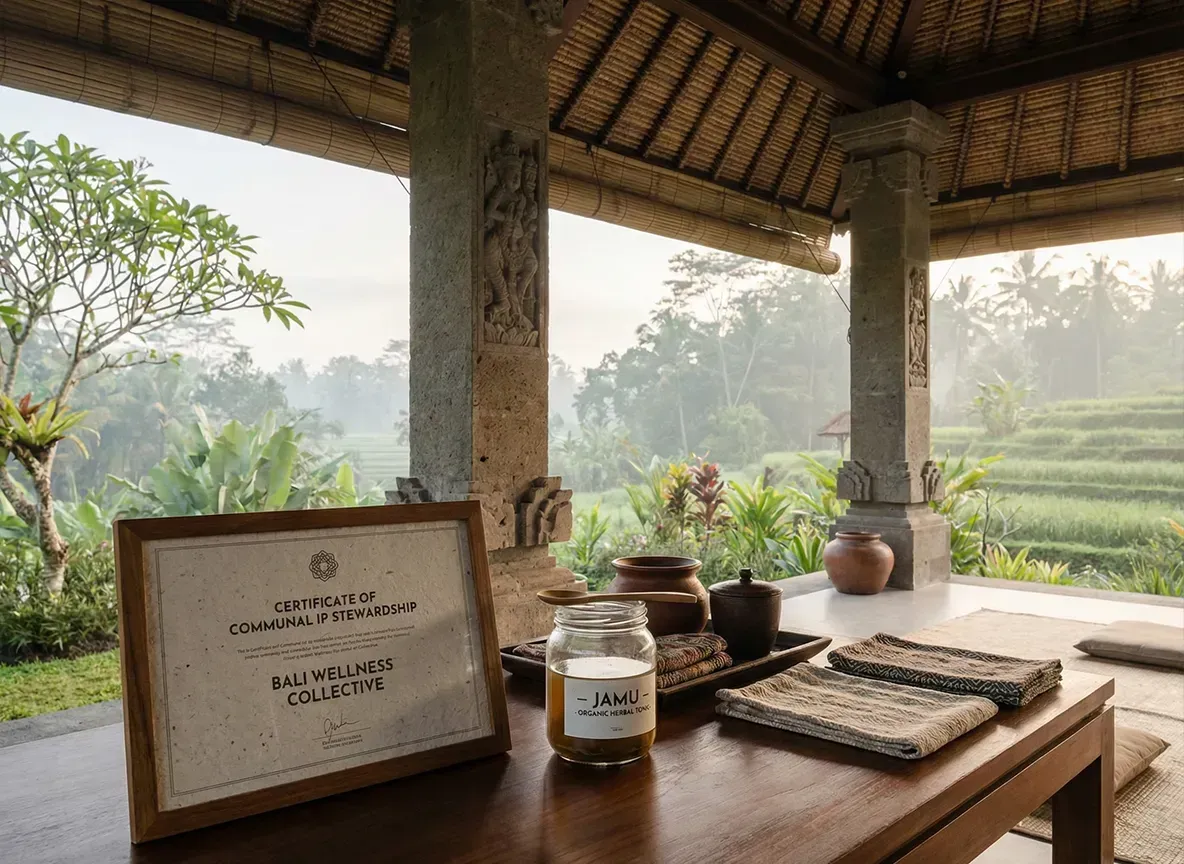
- The Communal IP Mapping: Aligning brand assets with the KIK (Kekayaan Intelektual Komunal) database maintained by the Ministry of Law and Human Rights.
- The Benefit-Sharing Framework: Implementing transparent "Economic Contribution" models that satisfy the SDG 8 (Decent Work and Economic Growth) requirements for community value retention.
.
| Asset Type | Traditional View | 2026 Protocol |
|---|---|---|
| Medicinal Plants | Open Access / Public Domain | Access & Benefit Sharing (Nagoya Protocol) |
| Healing Rituals | Marketable Experience | Communal Intellectual Property (KIK) |
| Iconography | Aesthetic Inspiration | Copyright Disclosure (WIPO 2024 Treaty) |
| Legal Risk | Reputation Loss | Criminal Liability (Law No. 1/2026) |
FAQ
Indigenous IP & Wellness Law
How does the 2024 WIPO Treaty change my wellness brand's IP strategy?
If your products utilize traditional Balinese botanicals or knowledge associated with genetic resources, you are now legally mandated to disclose the Indigenous Peoples or local community that provided that knowledge in your patent applications. Failure to provide this disclosure can lead to the rejection of your IP or future legal challenges under the "Erroneous Grant" provision of the treaty.
What is the legal risk of trademarking a name derived from Balinese sacred rituals?
Under the 2026 enforcement of Government Regulation No. 56 of 2022, sacred names or rituals (e.g., Melukat) are classified as communal property. Any attempt by a foreign entity to claim exclusive commercial rights over these terms can be challenged as a violation of "Public Policy" and "Cultural Integrity," resulting in the revocation of the trademark and potential fines under the New Penal Code.
Can a foreign-owned wellness retreat legally sell "Traditional Healing" services?
Yes, but only if the practitioners are locally certified and the business maintains an active MoU with the local Desa Adat. In 2026, regulators are targeting "Economic Leakage" where Western-owned centers profit from Balinese traditions without local guardianship or shared-equity models.
Outcome
By engineering "Indigenous Integrity" into the business model, wellness brands move from "Cultural Extraction" to "Technical Stewardship." This approach secures the brand’s global IP while insulating the operator from the 2026 crackdown on biopiracy and cultural misappropriation.
- Related Technical Entities
- WIPO GRATK Treaty 2024 (Genetic Resources & Traditional Knowledge)
- KIK (Kekayaan Intelektual Komunal) Database
- Nagoya Protocol (Access and Benefit-Sharing)
- Law No. 5 of 2017 (Advancement of Culture)
- Desa Adat (Traditional Village Authority)
Reach out to IP ASSIST
for a complimentary consultation if you are an expat business based in Bali, Indonesia.