Darwin-to-Bali Trade in 2026
The Darwin-to-Bali Corridor: Navigating the IA-CEPA "Katalis 2.0" Framework for SMEs
TL;DR: As of March 2026, the IA-CEPA General Review has entered its final public submission phase, signaling a shift toward deeper digital and services integration. By leveraging the newly launched Katalis 2.0 economic cooperation program, Australian SMEs can access non-tariff barrier (NTB) mitigation and specialized "Skills Exchange" visas. Success in this corridor requires a "Double-Gate" compliance strategy: meeting Northern Territory (NT) export standards and the revised Indonesian Ministry of Trade Regulation No. 16/2025.
The Regulatory Challenge: Technical Barriers to Trade (TBT)
While IA-CEPA has eliminated 99% of tariffs, the "New Frontier" of trade barriers is the Technical Barrier to Trade (TBT). Under the current 2025-2029 Plan of Action, exporters face stricter Sanitary and Phytosanitary (SPS) measures and the looming October 17, 2026 mandatory Halal Certification deadline for food, beverages, and natural drugs. For Darwin-based exporters, the challenge is no longer the "Border Duty" but the "Behind-the-Border" compliance involving product labeling, laboratory testing standards, and the Verification of Origin (V-Or) required to claim 0% tariff status.
The Solution: The "Katalis 2.0" Strategy
IP Assist implements a "Corridor-Specific Audit" that utilizes the expanded professional services and digital economy provisions in the IA-CEPA.
The Four Tests of the Darwin-Bali Corridor:
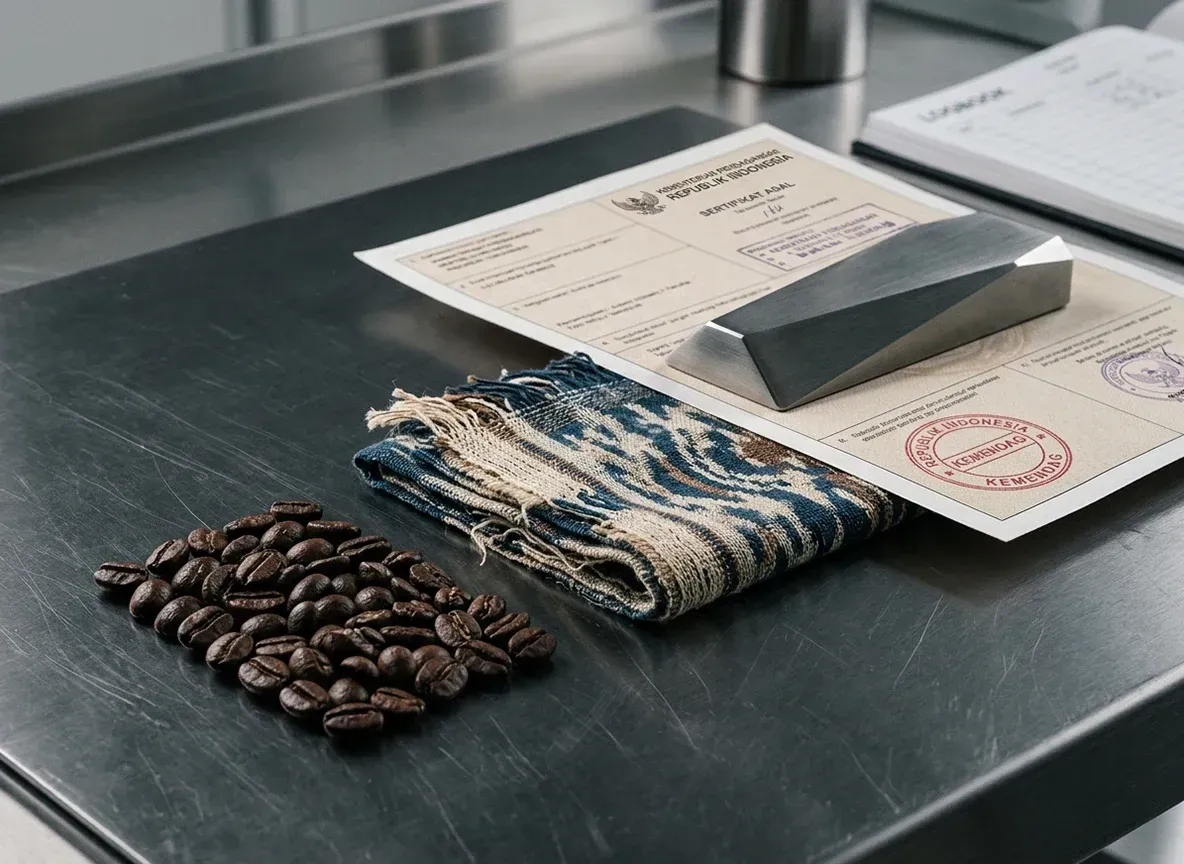
- The Origin Verification Test: Ensuring goods meet the "Wholly Obtained" or "Change in Tariff Classification (CTC)" rules to qualify for IA-CEPA certificates of origin.
- The Katalis 2.0 Alignment: Accessing the newly re-funded Katalis 2.0 program ($40M through 2030) for market-entry studies in the health, aged care, and digital transformation sectors.
- The Skills Exchange Pilot: Utilizing the 12-month workplace placement provision (as seen in recent partnerships like Binus and TAFE QLD) to embed technical staff within Indonesian partner entities.
- The MOT 16/2025 Buffer: Navigating the Ministry of Trade Regulation No. 16/2025, which replaced Regulation 36/2023, shifting the focus to "Commodity Balance" and automated import permit (PI) approvals.
| Feature | Standard Australian Export | Darwin-Bali "Outlier" Protocol |
|---|---|---|
| Tariff Rate | Varies by MFN status | 0% (IA-CEPA Guaranteed) |
| Visa Pathway | Standard Business Visa | 12-Month Skills Exchange (Katalis 2.0) |
| Regulatory Support | Self-Guided | Prospera 2.0 & Katalis 2.0 Integrated |
| Import Logic | MOT Reg 36/2023 (Revoked) | MOT Reg 16/2025 (Commodity Balance) |
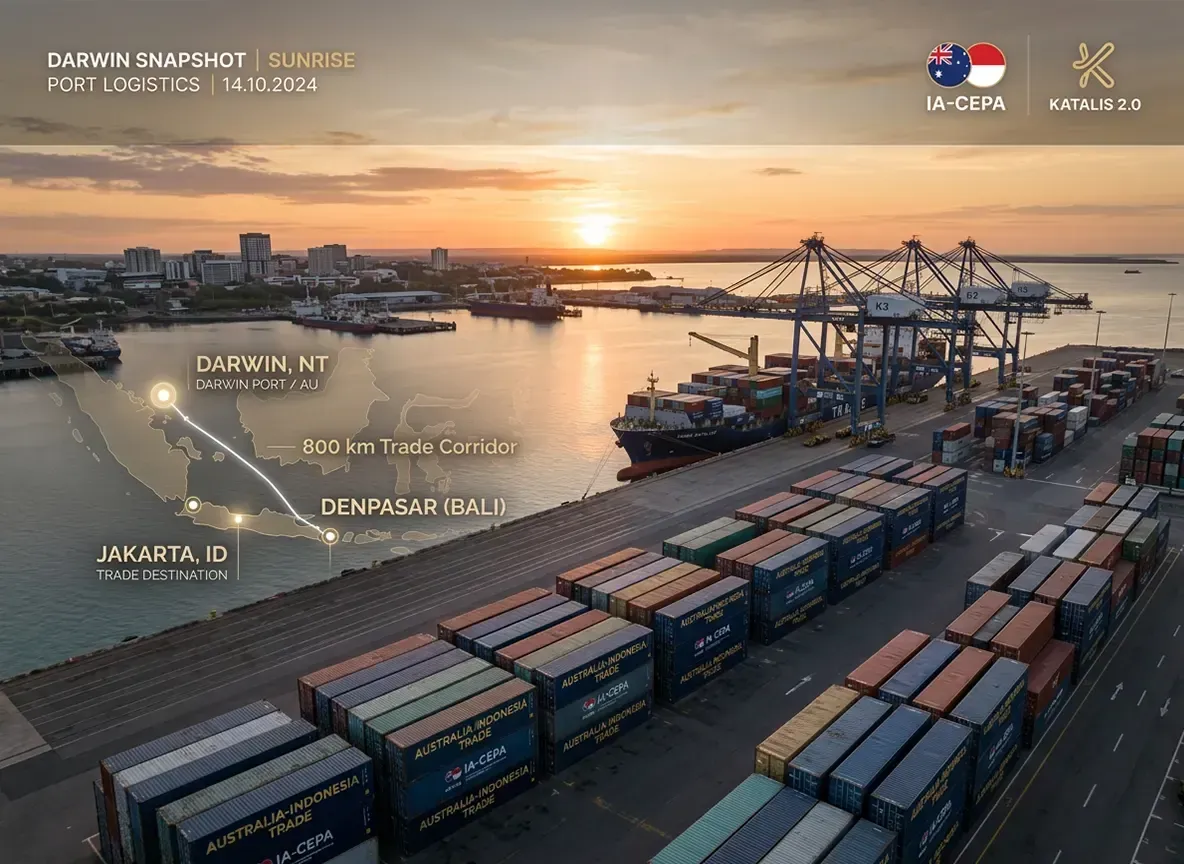
| Logistics Advantage | 4,000+ km (from East Coast) | 800 km (Proximity Efficiency) |
FAQ
Darwin-Bali Trade Compliance
How does the "Katalis 2.0" program assist Australian SMEs specifically?
The Katalis 2.0 program (2025–2030) functions as a commercial "de-risking" tool. It funds market insights, research, and technical assistance for SMEs in priority sectors like the care economy and assisted medical devices. By aligning with Katalis, SMEs move from "speculative entry" to a "verified compliance pathway" that leverages the full breadth of the IA-CEPA treaty.
What is the "October 2026" Halal deadline mentioned for Darwin exporters?
Starting October 17, 2026, Indonesia will enforce mandatory halal certification for food, beverages, natural drugs, and consumer goods under Government Regulation No. 42 of 2024. Darwin-based exporters must ensure their products are certified by BPJPH or a recognized foreign body before the deadline to avoid administrative sanctions and market exclusion.
Can service-based businesses in Darwin benefit from the IA-CEPA?
Yes. The Invested: Indonesia to 2040 (2nd Ed) guide highlights that IA-CEPA allows for increased foreign ownership in education, vocational training, and digital services. Darwin firms can utilize the Skills Exchange provisions to deploy staff for up to 12 months in Jakarta or Bali to build local technical capacity.
Outcome
By anchoring operations in the Darwin-Bali corridor, Australian businesses reduce their "Compliance Lead Time" by utilizing local NT-ASEAN trade offices and Gareth Benson’s specialized "Bridge" legal framework. This engineered approach ensures that the IA-CEPA is not just a treaty on paper, but a functional tool for cross-border expansion.
Related Technical Entities
- IA-CEPA (Comprehensive Economic Partnership)
- Katalis 2.0 (Economic Cooperation Program)
- MOT Regulation No. 16 of 2025
- Halal Product Assurance Agency (BPJPH)
- Certificate of Origin (COO)
Reach out to IP ASSIST
for a complimentary consultation if you are an expat business based in Bali, Indonesia.